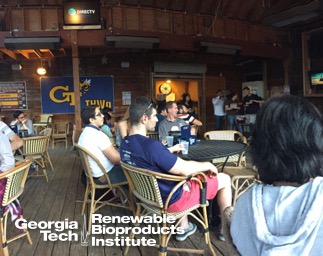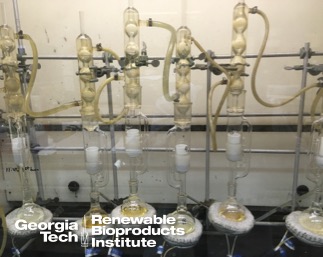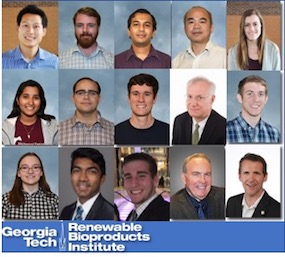
GT TAPPI: The Top Talent Pool for the Pulp & Paper Industry
|
|
Important Links: Participating Academic Units |
|
|
Important Links: Participating Academic Units |

Grade Submission Deadline: Spring 2026
Last day to apply for grade substitution. Forms must be submitted no later than 4:00 PM Eastern Time.
The closure of the Strait of Hormuz is sending shockwaves far beyond rising gas prices, threatening to reshape global supply chains for months or even years to come. With roughly 20% of the world's oil and liquefied natural gas flowing through this critical chokepoint, disruptions are already rippling across industries from plastics and pharmaceuticals to aluminum, fertilizers, and consumer electronics. Unlike other trade disruptions, the strait offers no scalable rerouting alternatives, forcing longer shipping paths that drive up fuel, labor, and inventory costs worldwide. Experts warn that the most severe economic consequences — including higher food prices, reduced crop yields, and costlier manufactured goods — may not surface for six to twelve months, long after headlines have moved on. As global supply chains remain optimized for efficiency over resilience, the Hormuz crisis exposes just how vulnerable interconnected economies are to a single point of failure in international energy trade.
By uncovering the conditions under which the Moon’s rocks formed, scientists move closer to understanding the origins of our own planet.
Georgia Institute of Technology
North Avenue, Atlanta, GA 30332
404.894.2000